Episode: Reality Stars
- 4.6
- Rating
- 1.00M
- Installs
- Free
- Price

 Analysis by App-foxy
Episode: Reality Stars is a choice-driven simulation game from Episode Interactive that puts me in the middle of a fictional Hollywood climb. I make decisions, shape relationships, react to story twists, and try to build a public image that can survive the pressure of fame. It is free to play and aimed at Teen players, but the real question is not whether it costs anything to install. The more useful question is whether its story-focused format makes the optional spending feel worthwhile.
After spending time with it, I see the game as an interactive celebrity drama rather than a traditional management simulator. I am not balancing spreadsheets, building studios, or controlling every business detail of a career. Instead, the simulation comes through conversations, social choices, fashion decisions, and the consequences attached to how I present myself. That makes it approachable, but it also means the experience depends heavily on whether I enjoy reading and making decisions at a steady pace.
How the Hollywood setup works in everyday play
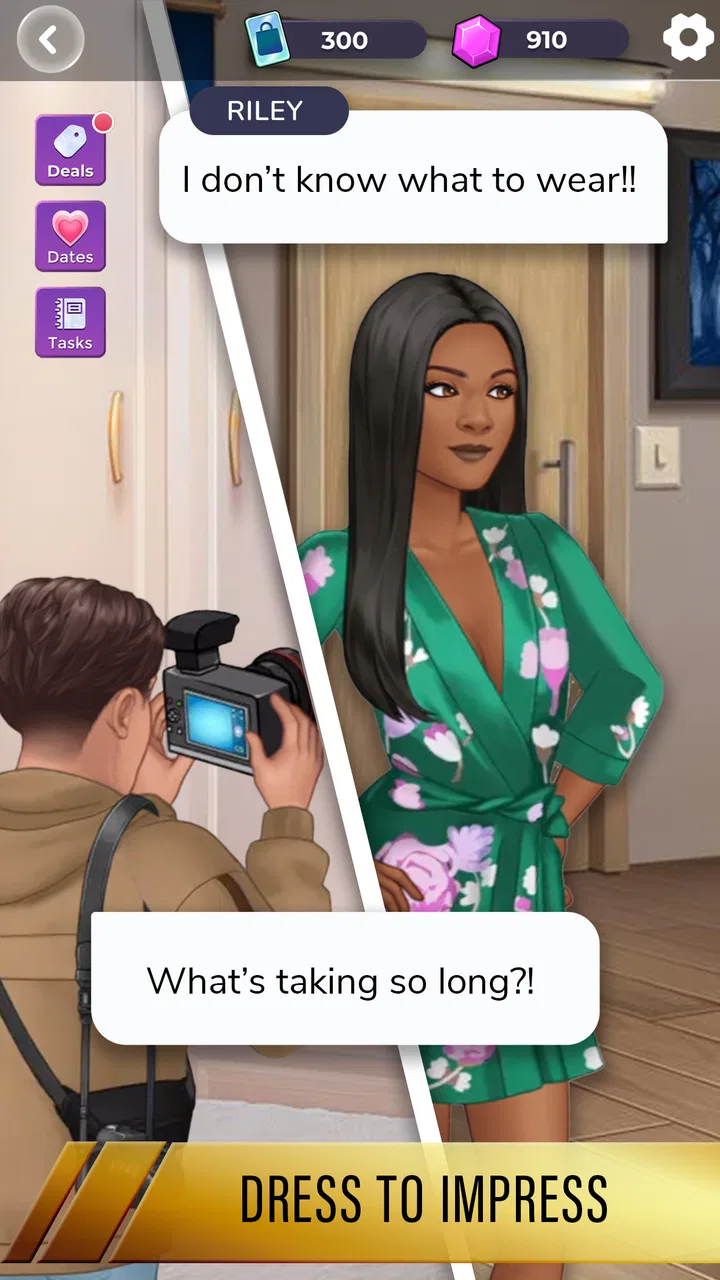
The basic appeal is easy to understand. I step into a world where appearance, reputation, ambition, and personal choices all compete for attention. The store summary describes the central fantasy clearly: making choices, dressing for the moment, and trying to rise as a star. In practice, I found that the strongest scenes are the ones where those elements overlap, such as deciding how to respond publicly while also thinking about how a character’s image will look to everyone around them.
You May Also Like

 Blood Strike: 2.5 Anniversary
Blood Strike’s Loadouts Turn Every Drop Into a Tactical Gamble
A close look at Blood Strike’s custom loadouts: how fast access to signature weapons reshapes its battle royale rhythm, rewards preparation, and narrows the gap between fights.

 Pandora - Music & Podcasts
Pandora’s Music Is Easy to Start, but Harder to Recover
Pandora’s strength is its low-effort path from a seed to a station. Its weak spot is how much confidence it asks you to place in connection, setup, and quiet recovery.

 8 Ball Pool
 Is Built on Rivalries, Rematches, and Routine
A close look at the rivalries, rematches, shared routines, and unanswered safety questions that turn a quick pool match into a persistent mobile community.

 Samsung Music
’s Quiet Strength Is Playing What You Already Own
Its reach comes less from spectacle than from dependable access to a personal library. That simplicity is both the app’s strongest retention engine and its ceiling.

 AccuWeather: Weather Radar
AccuWeather Review: A Quick, Clear Forecast for Everyday Decisions
For everyday plans, the best forecast is the one you can understand quickly. AccuWeather makes rain timing, radar, and local conditions easy to act on, with a few trade-offs.

 Hill Climb Racing
Why Hill Climb Racing Still Turns Crashes Into One More Run
A tiny car, a bumpy hill and one more upgrade: Hill Climb Racing keeps resurfacing because its simple chaos makes every near-miss feel personal.
More From Our News Desk
View All News


This is best played in short sessions. A realistic use case is opening the game during a commute, a lunch break, or before bed, reading through a chapter, and stopping after a decision or scene. The format suits that rhythm because the entertainment comes from seeing what happens next rather than from mastering a complicated control scheme. I would not choose it for a quick action fix, but I would choose it when I want a lightweight story that gives me something to react to.
The game’s simulation label can be slightly misleading if you expect detailed career planning. Its focus is closer to an interactive drama with simulation elements. I influence the protagonist’s path, but I am not independently directing every part of a Hollywood operation. That distinction matters when comparing it with conventional life simulators or business games. Those alternatives may offer deeper systems and more freedom, while Episode: Reality Stars offers a more guided experience built around scenes and choices.
Fashion is not merely decoration in the way I experienced the game. Choosing an outfit changes how I feel about a scene and helps define the version of the protagonist I want to play. I can approach the character as polished and strategic, expressive and bold, or more casual and relatable. The useful tip here is to treat clothing choices as part of role-playing rather than assuming every selection is only about finding the most attractive look.
That approach also helps with the story’s social moments. I found it more enjoyable to decide what my character would genuinely do instead of constantly hunting for an imagined perfect answer. A cautious response may fit a reputation-focused playthrough, while a dramatic answer may create a more entertaining story. If I always choose based on what seems safest, I lose some of the personality that makes this kind of game engaging.
Choices feel better when I commit to a character
One of my practical recommendations is to decide early what kind of celebrity story you want to tell. Do you want a protagonist who protects relationships, takes risks for visibility, or treats every opportunity as a career move? Keeping that imagined personality in mind makes the decisions feel less random. It also reduces the temptation to reload mentally after every choice and wonder whether another answer would have produced a better result.
This does not mean every decision feels equally weighty. Some moments are emotionally important because of the dialogue, while others mainly move the scene forward. The difference can be hard to predict. I learned to judge a choice by its immediate context instead of expecting every button to produce a major branch. That is a common trade-off in interactive fiction: the pleasure comes from participating in the story, but the amount of control may vary from scene to scene.
The developer, Episode Interactive, clearly works within a format designed for accessible storytelling. The game has attracted a sizeable audience, with over a million installs and an average rating of 4.6 from around thirteen thousand ratings. Those figures suggest that the presentation and choice-based structure connect with many players, although they do not guarantee that it will suit someone who prefers open-ended simulation.
Progress is shaped by attention as much as by decisions
Progress in a story game is not only about selecting the right dialogue. It also depends on how patiently I move through the narrative. I get more from the experience when I remember character relationships and notice how earlier choices influence my expectations. Rushing through every line turns the game into a sequence of taps, which makes the Hollywood setting feel much flatter.
There is a useful difference between playing for completion and playing for a personal storyline. Completion-minded players may focus on reaching the next chapter as efficiently as possible. I prefer treating each chapter as an episode of a television drama, because that makes the pauses and smaller conversations more meaningful. If you are mainly looking for a competitive score, a building system, or a clear win condition, this may feel too soft and narrative-led.
The game can also create a little pressure around decisions. Even when a choice is presented as entertainment, I naturally start thinking about consequences: will this damage a friendship, change a public impression, or close off an opportunity? That tension is part of the appeal, but it can become tiring if I expect every choice to be perfectly optimized. My best sessions came from accepting that an imperfect outcome can still make the story more interesting.
What spending changes in the experience
The game is free to download, and its in-app purchases range from $0.99 to $99.99 per item. That is the most important purchase context to understand before starting. The presence of a free entry point makes it easy to sample the story, while the wide purchase range means I would set a personal limit before becoming invested in the drama.
I would not approach optional purchases as a requirement for proving that I am playing well. In a choice-based celebrity story, it is easy to feel that a premium-looking outfit or a tempting decision represents the “correct” way to play. I find it healthier to ask whether a purchase improves a scene I already care about, rather than buying because the game has created urgency around a glamorous moment.
A sensible workflow is to play several sessions without spending, identify what you actually enjoy, and then decide whether an optional item adds enough value. This is especially useful for younger players and for anyone sharing a device or payment method. The Teen content rating is a reminder that the tone is intended for an older audience than small children, but it does not replace a household spending rule.
I also recommend avoiding impulse decisions during a cliffhanger. When a story pauses at a dramatic moment, the pressure to continue can feel stronger than it would in a calm menu. Waiting a few minutes and returning later is a simple way to separate genuine interest from the excitement of the scene. That habit costs nothing and gives me a clearer sense of whether I want the content or merely want the interruption to end.
Because purchase value is personal, I would not call the game automatically unfair simply because optional items exist. I also would not assume that every paid choice is essential. The honest position is narrower: the game has a free route into its Hollywood story, and it also offers paid items with a broad range of individual prices. I would judge each purchase by its immediate usefulness and by whether it fits my budget, not by the promise of a more impressive fictional lifestyle.
Is the experience fair to competitive-minded players?
Competitive fairness is a slightly unusual issue here because the core appeal is personal storytelling rather than direct competition. I am not entering a traditional multiplayer match where another player’s spending obviously determines the winner. That makes the game a better fit for people who measure success by the story they create, the relationships they explore, or the style they give their protagonist.
At the same time, players can still feel competitive pressure indirectly. The Hollywood setting encourages comparison: who looks most successful, who makes the boldest move, and who appears to have the best career. Optional purchases may become more noticeable when players compare outfits or outcomes with friends. My advice is to keep that comparison outside the definition of winning. The game is strongest when I treat it as a personal drama, not as a ranking of who spent more.
This is where it differs from a conventional competitive simulation. In a management game, fairness may depend on equal resources, transparent rules, and balanced progression. Here, fairness is more about whether I feel respected as a reader and decision-maker. If I want a system where skill, timing, and strategy are measured against other players, I would choose a different genre. If I want a guided celebrity fantasy, the absence of a serious competitive ladder is a benefit.
Another trade-off is that a guided story can make outcomes feel less controllable than a sandbox. I may make a choice that seems important and still find that the narrative continues along a narrow path. That is not necessarily a flaw, but it should be understood before downloading. Players who want every decision to create a radically different world may prefer a deeper branching narrative or a more open life simulator.
Who should play it, and who should skip it?
I recommend it to readers who enjoy interactive fiction, fashion-focused role-playing, celebrity dramas, and decisions that shape the tone of a character’s journey. It is particularly suitable for someone who wants a relaxed game that can be played in small portions. The Teen rating also makes it more appropriate for older players than for children, especially when optional spending is involved.
I would be more cautious recommending it to someone who dislikes reading dialogue, wants immediate action, or expects a detailed Hollywood business simulation. It is also not my first choice for a player who wants a fully transparent progression system with no emotional pressure around optional content. A traditional management game would be better for budgets and long-term planning; a competitive game would be better for measurable head-to-head skill; and a pure visual novel may be better for someone who cares more about branching narrative than fashion and celebrity presentation.
For families, I would discuss the free-to-play structure before handing over a device. The game itself can be sampled without committing money, but the purchase range makes it sensible to use the platform’s normal spending controls. I would also encourage a younger player to talk through choices that involve reputation, relationships, or public image, since the drama can feel more intense when the player identifies closely with the protagonist.
Version, access, and the questions I would ask before installing
The current version is 1.33, and the game requires at least OS 10. That makes checking the device software worthwhile before downloading, particularly on an older phone or tablet. I would also leave enough storage and use a stable connection for the initial setup, simply because story-heavy games are more enjoyable when interruptions do not break the flow.
A common question is whether the game is suitable for a short-session player. In my view, yes, provided you are comfortable stopping between scenes. Another is whether it replaces a full simulation game. No: it gives me the feeling of living through a celebrity storyline, but not the same depth of control as a business or life-management sandbox.
People also ask whether they need to spend money to enjoy it. I would start free and decide later. Since individual purchases can cost from less than a dollar to nearly one hundred dollars, I would never begin without knowing my own limit. The free entry point is enough to determine whether the writing style, pacing, and fashion choices hold your attention.
There are also practical unknowns that I would keep in mind without filling them with guesses. The purchase range tells me what optional items can cost, but it does not by itself explain how every item affects every scene. I therefore avoid assuming that a paid choice guarantees a particular long-term result. I play for the immediate story value and treat any larger consequence as something to discover naturally.
The same cautious approach applies to ratings. An average of 4.6 and roughly three thousand three hundred written reviews indicate a positive reception, but ratings cannot tell me whether the reviewers prefer the same pacing or spending style that I do. I use them as a reason to investigate, not as a substitute for trying the opening experience myself.
My trust verdict after weighing the trade-offs
My overall impression is positive, with a clear condition: Episode: Reality Stars works best when I want an interactive Hollywood drama and keep control of my expectations. The combination of choices, style, relationships, and ambition gives the simulation setting a personal feel. I can play it as a glamorous escape, but I can also make it more engaging by committing to a believable character instead of chasing an imaginary perfect route.
The main friction comes from the gap between the fantasy of total control and the reality of guided storytelling. Not every choice will feel equally powerful, and the free-to-play structure can make dramatic moments feel more commercially charged than a fully paid narrative game. Those are not reasons to reject it outright, but they are reasons to play slowly and decide deliberately.
Episode Interactive has made a game that is easy to approach and broad enough to attract a large audience. I would install it for the story, the outfit decisions, and the chance to shape a fictional rise to fame, not for deep strategy or competitive achievement. I would also keep purchases optional in my mind, even when the scene makes them feel urgent.
My final recommendation is to try it as a free, choice-led celebrity story, then judge the value by your own enjoyment rather than by the glamour on screen. If you like reading, role-playing, and making imperfect decisions under social pressure, it can become a pleasant companion for short breaks. If you need transparent competition, unrestricted simulation, or a completely purchase-free experience, another type of game will serve you better.
FAQs for Episode: Reality Stars
01What is Episode: Reality Stars and what can I expect from the gameplay?
Episode: Reality Stars is an interactive storytelling app where you can immerse yourself in drama-filled scenarios inspired by reality TV. Players can make choices that influence the story's outcome, affecting relationships and plot twists. With customizable avatars and multiple storylines, expect a personalized gaming experience with high replay value.
02Is Episode: Reality Stars free to play, or are there in-app purchases?
Episode: Reality Stars is free to download and play; however, it includes in-app purchases. Players can buy passes and gems to unlock premium content, speed up gameplay, or enhance their experience. While these purchases can enhance your gaming, they are optional, allowing you to enjoy the game without spending money.
03Can I play Episode: Reality Stars offline?
No, Episode: Reality Stars requires an internet connection to play. This is because the app regularly updates with new stories and episodes, which need to be downloaded. Additionally, the game syncs your progress and purchases, ensuring a seamless experience across devices.
04How often are new episodes or stories added to Episode: Reality Stars?
The developers frequently update Episode: Reality Stars with new stories and episodes. While there's no fixed schedule, players can generally expect fresh content monthly. This keeps the game engaging and offers continuous new experiences, so checking back regularly is beneficial for new adventures.
05How does Episode: Reality Stars handle user data and privacy concerns?
Episode: Reality Stars adheres to strict privacy policies to protect user data. The app collects necessary information to enhance user experience but ensures data is securely stored and not shared with third parties without consent. Users should review the app’s privacy policy for detailed information on data handling practices.
Pros
- Engaging narrative choices enhance immersion.
- High-quality graphics and animations.
- Frequent updates with new content.
- Diverse character customization options.
- Interactive storylines keep players hooked.
Cons
- In-app purchases can be expensive.
- Advertisements interrupt gameplay.
- Limited free episode access.
- Requires constant internet connection.
- Occasional glitches in story progression.

Episode: Reality Stars
Gallery